
how long does cocaine stay in your system

How Long Does Cocaine Stay in Your System? Detection Times Explained
How long does cocaine stay in your system? The answer depends mainly on the type of test used, the amount and frequency of use, individual metabolism and the laboratory’s detection threshold.
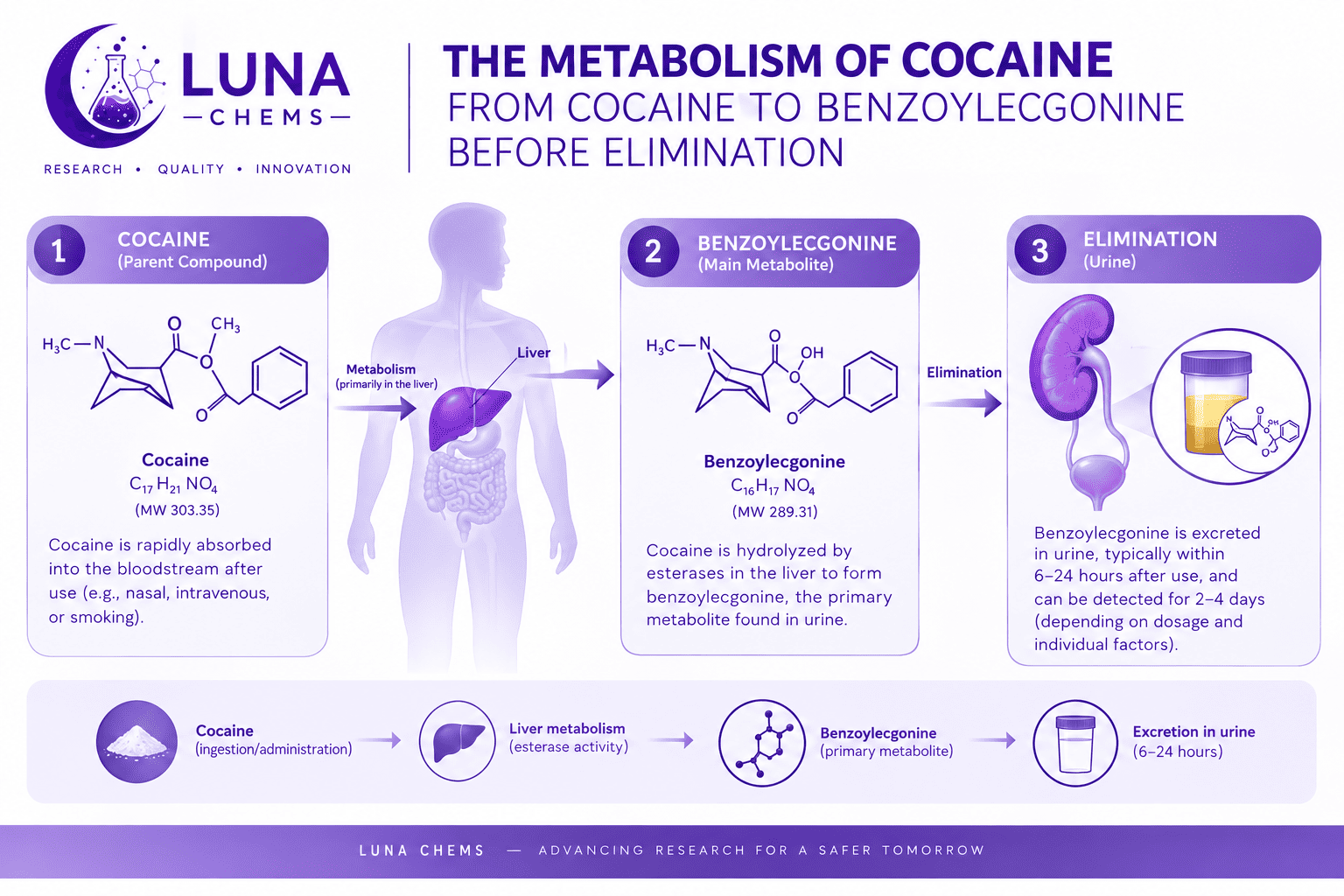
Cocaine itself is eliminated relatively quickly. However, drug tests usually look for benzoylecgonine, the primary cocaine metabolite, because it remains detectable longer than the parent drug.
For occasional use, cocaine metabolites may generally be detected for:
- Urine: About 1–3 days, commonly 2–3 days
- Blood: Cocaine for up to approximately 12 hours; benzoylecgonine for up to 48 hours
- Saliva: Approximately 1–2 days
- Hair: A pattern of repeated use for up to about 90 days
Heavy or repeated use can extend the urine detection period to approximately two weeks in some cases. These are estimates—not guaranteed deadlines.
Quick answer: Cocaine metabolites are commonly detectable in urine for 2–3 days after use. Blood and saliva have shorter windows, while hair testing may identify repeated use over approximately 90 days.
Cocaine Detection-Time Summary
| Test type | Approximate detection window | What the test usually detects |
|---|---|---|
| Urine | 1–3 days; commonly 2–3 days | Mainly benzoylecgonine |
| Urine after heavy or repeated use | Up to about 2 weeks in some cases | Accumulated cocaine metabolites |
| Blood | Cocaine up to about 12 hours; benzoylecgonine up to 48 hours | Cocaine and metabolites |
| Saliva or oral fluid | About 1–2 days | Cocaine and metabolites |
| Hair | Up to about 90 days for repeated use | Cocaine and metabolites deposited in hair |
| Sweat patch | Depends on the collection period | Drug exposure during or near the time the patch is worn |
These windows vary between laboratories. Test sensitivity, specimen quality and cutoff concentration can all change whether a result is reported as positive or negative.
The University of Rochester Medical Center reports that urine commonly detects cocaine metabolites for 2–3 days, saliva for approximately 1–2 days, and blood may contain cocaine for about 12 hours and benzoylecgonine for up to 48 hours.
Detection-window infographic placement
- Placement: Immediately after the detection-time table
- Image concept: A vertical infographic comparing urine, blood, saliva and hair detection windows
- Recommended size: 1000 × 1200 pixels
- Filename:
cocaine-drug-test-detection-window.jpg - Image title: Cocaine Drug-Test Detection Windows
- Alt text: Comparison of cocaine detection windows in urine, blood, saliva and hair
- Caption: Urine detects recent cocaine exposure, while hair testing may reflect repeated use over a much longer period.
- Accuracy note: Clearly label every timeframe as an estimate and state that individual results vary.
Why Is There No Exact Cocaine Detection Time?
There is no universal time when cocaine becomes completely undetectable. A person cannot determine an exact negative-test date from an online calculator or detection table.
A drug test reports a positive result only when the measured substance is above the test’s cutoff concentration. Two laboratories may use different methods or thresholds. Therefore, the same sample could theoretically be handled or interpreted differently depending on the testing programme.
Detection time is also influenced by:
- How much cocaine was used
- Whether use occurred once or repeatedly
- Time since the last exposure
- The type and sensitivity of the test
- Liver and kidney function
- Individual metabolism
- The presence of alcohol or other drugs
- Sample type and quality
- Whether the initial result receives laboratory confirmation
A negative result does not necessarily prove that cocaine was never used. It may mean the test was performed outside its detection window or that the concentration was below the reporting cutoff.
What Do Cocaine Tests Actually Detect?
After cocaine enters the body, enzymes break it down into several metabolites. The most important metabolite for routine testing is benzoylecgonine.
Cocaine has a short average half-life—approximately 0.7 to 1.5 hours. Because the parent drug disappears quickly, it may be difficult to detect after a relatively short period. Benzoylecgonine remains longer and is therefore the primary target of most urine cocaine screens. ARUP Consult lists an estimated cocaine half-life of 0.7–1.5 hours and notes that testing typically measures benzoylecgonine.
A half-life is the amount of time required for the concentration of a substance in the body to fall by approximately half. It does not show the exact moment when every trace has disappeared.
How Long Does Cocaine Stay in Urine?
Urine is the most commonly used specimen for cocaine drug testing. It offers a longer detection window than blood and is easier to collect.
After occasional use, benzoylecgonine may commonly be detected in urine for approximately 2–3 days. Some sensitive laboratory methods cite a shorter or longer window depending on the cutoff used.
With heavy, frequent or repeated cocaine use, metabolites may remain detectable for considerably longer. The University of Rochester Medical Center notes that urine results may remain positive for up to approximately two weeks in some heavy users.
The extended window can occur because repeated use allows metabolites to accumulate. However, two people who use similar amounts may still receive different results because metabolism and test sensitivity vary.
How Long Does Cocaine Stay in Blood?
Blood testing has a shorter detection window and is less commonly used for routine workplace screening. It may be used in hospitals, medical emergencies, impaired-driving investigations or situations where recent exposure is important.
Approximate blood detection times include:
- Parent cocaine: Up to about 12 hours
- Benzoylecgonine: Up to approximately 48 hours
Blood testing may provide more information about recent exposure than a urine test. However, the presence of cocaine or a metabolite does not always prove that a person was impaired at the exact time the sample was collected.
How Long Does Cocaine Stay in Saliva?
Saliva—also called oral-fluid testing—generally detects recent cocaine exposure for approximately one to two days.
Oral-fluid collection is less invasive than blood testing and can be directly observed. This makes it useful in some workplace, roadside and post-incident testing programmes.
Results still depend on:
- The device and laboratory method
- The cutoff concentration
- The time since exposure
- Sample volume and quality
- Whether the result is screened or laboratory-confirmed
Because saliva testing focuses on recent exposure, it has a much shorter look-back period than hair testing.
How Long Does Cocaine Stay in Hair?
Hair testing may identify a pattern of repeated cocaine use over approximately 90 days when a standard head-hair sample is tested.
Drugs and metabolites enter growing hair through the bloodstream. Once incorporated into the hair shaft, they can remain there as the hair grows.
However, hair testing has important limitations:
- It may not detect very recent use because hair needs time to grow above the scalp.
- It is generally more useful for identifying a pattern of repeated use than one isolated exposure.
- The detection period depends on the length of hair tested.
- Chemical treatments and sample location can affect interpretation.
- Laboratories must consider possible external contamination.
- Hair testing cannot show the exact day cocaine was used.
According to Quest Diagnostics, hair testing can identify patterns of repeated drug use for up to approximately 90 days, while urine generally reflects more recent exposure.
The correct term is a hair drug test, although people often call it a “hair-follicle test.” Laboratories normally test the hair shaft rather than removing or testing the follicle itself.
How Long Does Cocaine Stay in Sweat?
Sweat testing usually involves wearing an adhesive patch for several days or weeks. The patch collects small amounts of drugs and metabolites released through sweat.
Unlike urine or blood testing, a sweat patch monitors exposure over the period when the patch is worn. Therefore, it does not have one simple detection window that applies to every situation.
Sweat testing is less common and may be used in certain treatment, probation or monitoring programmes.
Cocaine Effects vs. Cocaine Detection
The length of cocaine’s noticeable effects is not the same as its detection window.
A person may no longer feel stimulated while cocaine metabolites are still detectable. Likewise, feeling sober does not prove that driving, working or performing another safety-sensitive activity is safe.
The difference can be summarized as follows:
- Subjective effects: Often relatively short
- Parent cocaine in the body: Usually much shorter than metabolite detection
- Urine metabolites: Commonly present for several days
- Hair evidence: May reflect repeated exposure over months
Drug tests generally identify past exposure. They do not always measure present impairment.
Factors That Affect How Long Cocaine Remains Detectable
1. Frequency of use
Repeated use is one of the strongest factors affecting detection time. Someone who uses cocaine frequently may retain detectable metabolites longer than someone with one isolated exposure.
2. Amount used
Larger amounts generally create more metabolites for the body to process. However, the purity of illicit cocaine is unknown, so the actual dose may not match what a person believes they used.
3. Testing method
Blood, urine, saliva and hair answer different questions. Blood and saliva are generally used for more recent exposure, while hair provides a longer historical window.
4. Laboratory cutoff
Every test has a threshold. A highly sensitive laboratory test may detect lower concentrations than a rapid screening kit.
5. Metabolism and general health
Age, genetics, hydration status and liver or kidney health can affect how the body processes and removes substances. These factors do not allow an exact individual detection time to be calculated.
6. Repeated dosing during a binge
Using multiple doses over several hours changes the “last use” time and can increase metabolite accumulation. The detection period should be considered from the final exposure, not the beginning of the session.
7. Alcohol and other substances
Combining cocaine with alcohol causes the body to produce another active metabolite called cocaethylene. Research indicates that cocaethylene lasts longer than cocaine and may increase cardiovascular toxicity.
Mixing alcohol with cocaine does not make either substance safer. It can place additional strain on the heart and make medical effects less predictable.
Can You Speed Up Cocaine Elimination?
There is no scientifically reliable method that guarantees cocaine metabolites will disappear quickly enough to change a drug-test result.
Commercial “detox” drinks, extreme exercise, saunas, supplements and excessive water intake cannot reliably control the result of a properly conducted laboratory test. Some methods can also cause dehydration, abnormal electrolytes or other health problems.
Excessive water may dilute urine, but laboratories can check specimen validity. A diluted or altered sample may be rejected, reported separately or require recollection.
Only time and the body’s normal metabolic processes reduce cocaine and benzoylecgonine concentrations. If the concern is medical rather than legal or employment-related, contact a healthcare professional and be honest about what was taken.
How Accurate Are Cocaine Drug Tests?
Many programmes use a two-step process:
- Initial screening: A rapid immunoassay looks for cocaine metabolites above a set cutoff.
- Confirmation testing: A more specific laboratory method confirms the result and identifies the detected substance.
Initial screens can occasionally produce unexpected results. For that reason, a non-negative screening result should generally receive confirmation using a method such as gas or liquid chromatography combined with mass spectrometry.
MedlinePlus drug-testing guidance explains that a positive screening result is commonly followed by a more sensitive confirmation test.
A drug-test result should be interpreted by a qualified laboratory professional, medical review officer or healthcare provider. A positive test identifies exposure; it does not by itself diagnose cocaine addiction.
Cocaine Overdose and Medical Emergencies
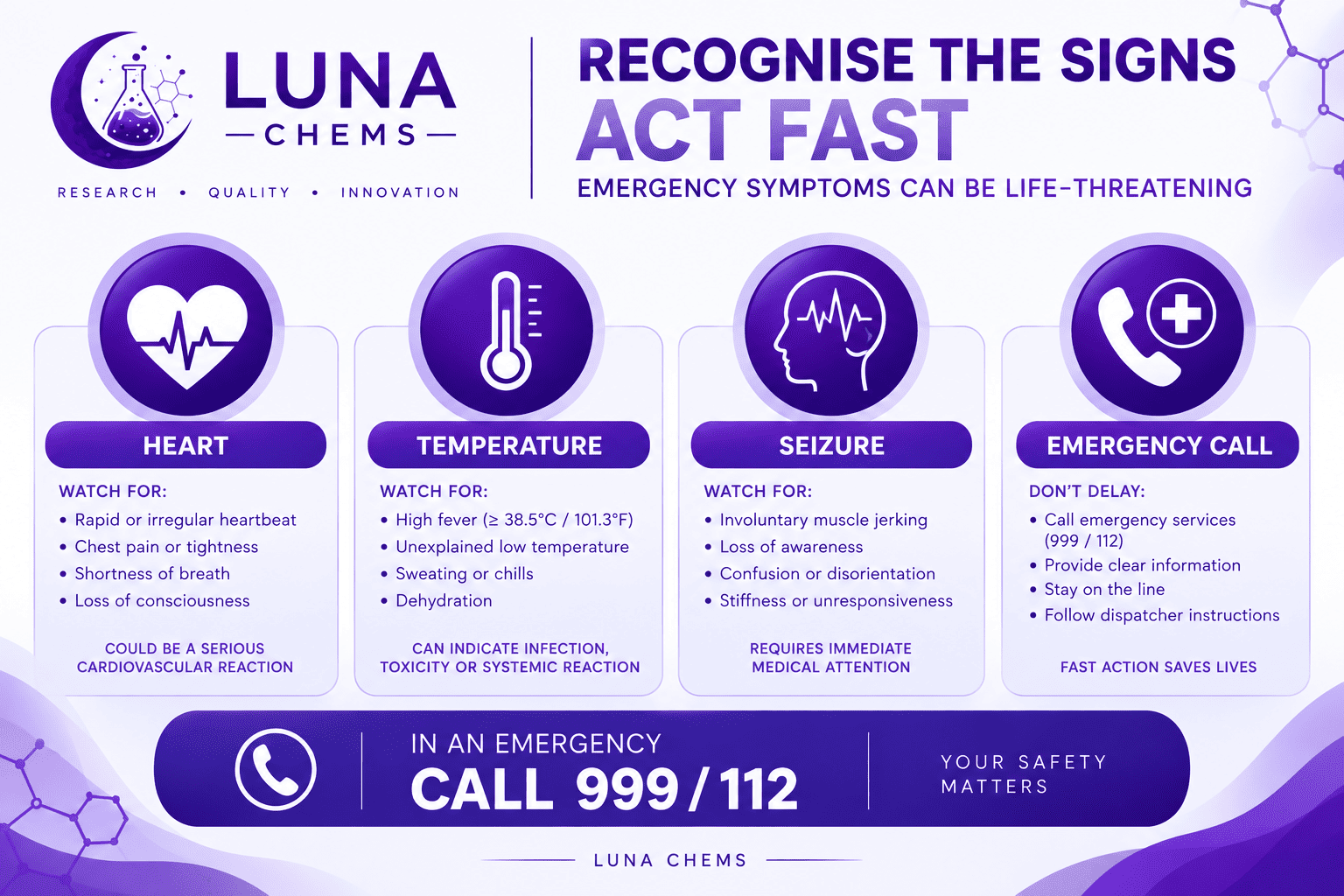
Cocaine can cause a medical emergency even in someone who has used it before. Severe toxicity may involve the heart, brain, body temperature or mental state.
Call your local emergency number immediately if someone develops:
- Chest pain or pressure
- A very fast or irregular heartbeat
- Severe headache
- Seizure
- Extreme agitation, panic or paranoia
- Confusion or inability to respond normally
- Very high body temperature
- Heavy sweating with worsening distress
- Weakness or numbness on one side
- Difficulty speaking
- Collapse or unconsciousness
- Slow, shallow or stopped breathing
Stay with the person and follow the emergency dispatcher’s instructions. Do not allow them to drive themselves for treatment.
The CDC’s stimulant guidance warns that cocaine can contribute to heart attack, stroke, dangerous overheating and serious mental-health effects.
Fentanyl-Contaminated Cocaine
Illicit cocaine may contain fentanyl without the person’s knowledge. Fentanyl is a powerful opioid that can cause dangerously slow or stopped breathing.
The CDC states that illegally manufactured fentanyl can be mixed into cocaine and cannot be reliably identified by appearance, taste or smell.
If someone is unconscious, cannot be awakened or has slow or absent breathing:
- Call emergency services immediately.
- Give naloxone if it is available.
- Begin rescue breathing or CPR if trained.
- Give another naloxone dose after the recommended interval if the person remains unresponsive.
- Stay with the person until professional help arrives.
Naloxone does not reverse cocaine toxicity itself. However, it can reverse an opioid overdose caused by fentanyl contamination and generally will not harm someone who has no opioid in their system.
Cocaine Withdrawal and Getting Support
After heavy or repeated use stops, a person may experience a “crash.” Symptoms can include:
- Strong cravings
- Fatigue
- Increased sleep
- Irritability
- Anxiety
- Depressed mood
- Loss of pleasure
- Poor concentration
- Increased appetite
- Disturbing dreams
Cocaine withdrawal is not always visibly dramatic, but depression and suicidal thoughts can become serious. Anyone experiencing suicidal thoughts, severe depression, chest symptoms or confusion should receive urgent professional help.
Support is available through doctors, mental-health professionals and substance-use treatment services. In the United States, SAMHSA’s National Helpline is available at 1-800-662-HELP (4357). Elsewhere, contact a local addiction-treatment or mental-health service.
Frequently Asked Questions
How long does cocaine stay in urine after one use?
Cocaine metabolites are commonly detectable for around 2–3 days after occasional use. The actual result depends on dose, metabolism, laboratory sensitivity and cutoff concentration.
Can cocaine remain in urine for seven days?
It is possible, particularly after repeated or heavy use. In some heavy users, urine may remain positive for up to approximately two weeks.
How long does cocaine stay in blood?
Parent cocaine may be detectable in blood for up to around 12 hours, while benzoylecgonine may remain detectable for up to approximately 48 hours.
How long does cocaine stay in saliva?
Cocaine or its metabolites may generally be detected in saliva for approximately one to two days.
How long does cocaine stay in hair?
A standard hair test may identify a pattern of repeated cocaine use over approximately 90 days. The exact period depends on hair length and laboratory procedure.
Why do urine tests look for benzoylecgonine?
Cocaine has a short half-life and disappears relatively quickly. Benzoylecgonine remains longer, making it a more useful marker of previous cocaine exposure.
Will drinking water remove cocaine faster?
Normal hydration supports general health, but drinking large amounts of water does not reliably eliminate cocaine metabolites. Excessive water intake can be dangerous and may produce a diluted specimen.
Can exercise or a sauna clear cocaine from the body?
There is no reliable evidence that exercise or sauna use can guarantee faster clearance or a negative drug test. Extreme exercise and heat exposure may create additional health risks.
Does a positive test prove current impairment?
Not necessarily. A positive result shows that cocaine or a metabolite was detected above the test’s cutoff. It may not prove that the person was impaired when the sample was collected.
Can passive exposure cause a positive cocaine test?
Ordinary environmental exposure is unlikely to produce a confirmed positive result at standard testing thresholds. A laboratory professional should review any unexpected result.
Can cocaine be mixed with fentanyl?
Yes. Illicit cocaine can contain fentanyl without the user’s knowledge. Slow breathing, unresponsiveness or blue or grey lips should be treated as a possible opioid overdose.
Can a home test provide a final result?
Home tests can provide preliminary information, but their sensitivity varies. An unexpected positive result should be confirmed by an accredited laboratory.
The Bottom Line
So, how long does cocaine stay in your system? Cocaine itself has a short half-life, but its main metabolite, benzoylecgonine, remains detectable longer.
For most testing situations:
- Urine may detect metabolites for approximately 1–3 days, commonly 2–3 days.
- Heavy or repeated use may produce a positive urine test for up to about two weeks.
- Blood may detect cocaine for around 12 hours and benzoylecgonine for up to 48 hours.
- Saliva may detect recent exposure for approximately one to two days.
- Hair testing may show a pattern of repeated use over approximately 90 days.
These timeframes are estimates. No online chart can guarantee when a particular person will test negative. If cocaine use has caused chest pain, seizures, severe agitation, overheating, collapse or breathing problems, seek emergency medical help immediately.